

They open it when they need something. A paragraph. A summary. A reply. A plan. A few ideas. Maybe some code.
That is not wrong. It is useful. I still use AI that way too.
But I think the real shift is happening one layer above the prompt.
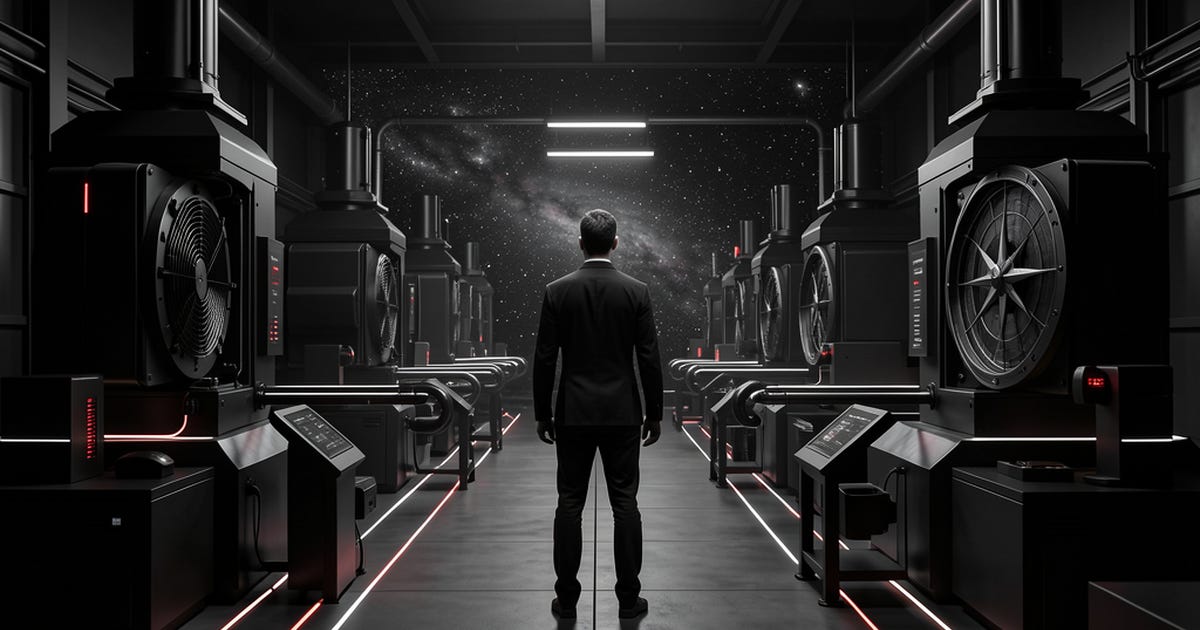
The new job is not only asking AI for better answers. The new job is training a small work factory that can repeat a useful result without becoming stupid, sloppy, or dangerous.
That sounds dramatic until you look at what already happens in normal knowledge work. A person does not only produce one thing. They gather context, make a judgment, draft something, check it, fix the weak parts, decide what is good enough, and then repeat the process tomorrow.
AI compresses the production part. It does not remove the responsibility around the production part.
The wrong map: better prompts will save you
The shallow AI advice is still obsessed with the prompt.
Write clearer prompts. Use better prompt formulas. Add more context. Ask the model to act like an expert. Chain a few instructions together.
There is some truth there. A bad prompt can waste time. A clear prompt can improve the output.
But prompt skill by itself is too small for the world we are entering.
A prompt is a request. A work system is a repeatable way of producing, checking, and improving a result.
If you only improve the request, you may get a better first draft. If you improve the system, you get a better way of working.
That difference matters because AI makes weak work easier to scale. A bad process with no review becomes faster. A vague standard becomes more dangerous. A lazy workflow becomes more convincing.
The problem is not that AI writes badly. The problem is that it can write confidently inside a workflow that has no standards.
The better map: the operator owns the loop
The useful AI worker is not the person who types the most clever prompt.
It is the person who knows what the work is supposed to become.
That means they can answer simple questions before the model starts generating:
What is the job of this output? Who is it for? What would make it wrong? What would make it useful? What must be checked by a human? What should be saved as a reusable workflow?
This is why I like the operator frame.
An operator does not worship the machine. An operator also does not panic about the machine. An operator builds the loop around the machine.
Input. Context. Draft. Review. Correction. Standard. Memory. Reuse.
That is the factory. Not a physical factory, but a repeatable work environment where each step has a purpose.
The mechanism: AI moves the bottleneck from output to judgment
Before AI, a lot of energy went into producing the first version.
Writing the first draft. Creating the first outline. Translating the first idea into structure. Starting the code. Summarizing the notes. Building the first plan.
Now the first version is cheaper. Sometimes it appears in seconds.
That feels like magic for a while, but then a new problem appears.
If first versions are cheap, the valuable work moves to deciding which version deserves to survive.
The bottleneck becomes judgment.
Can you see what is missing? Can you tell when the answer is polished but empty? Can you spot the hidden assumption? Can you check the technical claim? Can you protect the reader, customer, user, or team from a confident mistake?
This is not soft work. This is operational work.
A factory without quality control does not become powerful because it is fast. It becomes a faster way to ship defects.
The same is true for AI workflows.
The field note: I do not want to be a spectator of my own tools
This is personal for me because I am rebuilding around cloud, AI, writing, and systems at the same time.
It is very easy to become a spectator.
You watch AI produce things. You watch tools become smarter. You watch people argue about whether jobs are safe. You watch new workflows appear every week.
And if you are not careful, you start confusing exposure with competence.
I do not want that.
I want my work to become more inspectable. If AI helps me write, I still need to know what a good draft is. If AI helps me study cloud, I still need to understand the architecture. If AI helps me create a workflow, I still need to know where it breaks.
That is the operator path.
Not fake mastery. Not pretending to be ahead of everyone. Just refusing to hand over judgment because the machine got faster.
What changes when you think like an operator
The operator frame changes what you pay attention to.
You stop judging the workflow by whether the first answer looks impressive. You start judging it by whether the same process can produce a useful result again tomorrow.
That means the quiet parts become important. Naming files clearly. Saving the prompt that worked. Writing down the review standard. Keeping examples of good output. Keeping examples of bad output. Making the next run less dependent on your mood.
This is not glamorous. But most reliable work is not glamorous while it is being built.
The person who can do this becomes useful in a different way. They are not only producing work. They are improving the environment that produces work.
That is why I think the future AI worker looks less like a magician and more like a calm systems person. They know where the model helps. They know where it lies. They know what needs human checking. They know what should never be automated without review.
A small operating loop you can use this week
Pick one repeated task you already do. Do not start with your whole life. Start with one task that returns every week.
Write the standard before you use AI. Define what a good result looks like, what must not happen, and what needs human checking.
Let AI produce the first version, but do not let it define the final standard. Your job is not only to receive output. Your job is to inspect it.
Create a correction log. Every time the model misses something, write the rule you wish it had followed.
Turn the improved process into a reusable checklist. The checklist is where the factory starts to become real.
Review the workflow after a week. Ask what became faster, what became clearer, and what became more fragile.
Final reflection
The future of work will not only divide people into those who use AI and those who do not.
That division is already too simple.
The sharper division may be between people who consume AI output and people who can operate AI systems.
One group asks for more answers.
The other group builds loops that make answers useful, checked, and repeatable.
I want to be in the second group.
Not because it sounds more impressive. Because it is the only version that still keeps the human responsible.