

The easiest way to misunderstand a big shift is to turn it into a single villain story.
One company failed.
One policy went wrong.
One technology arrived.
One group took advantage.
That kind of story feels clean, but it usually hides the mechanism.
The more useful question is:
What changed in the operating system underneath the result?
That is the frame I keep coming back to as I study this topic.
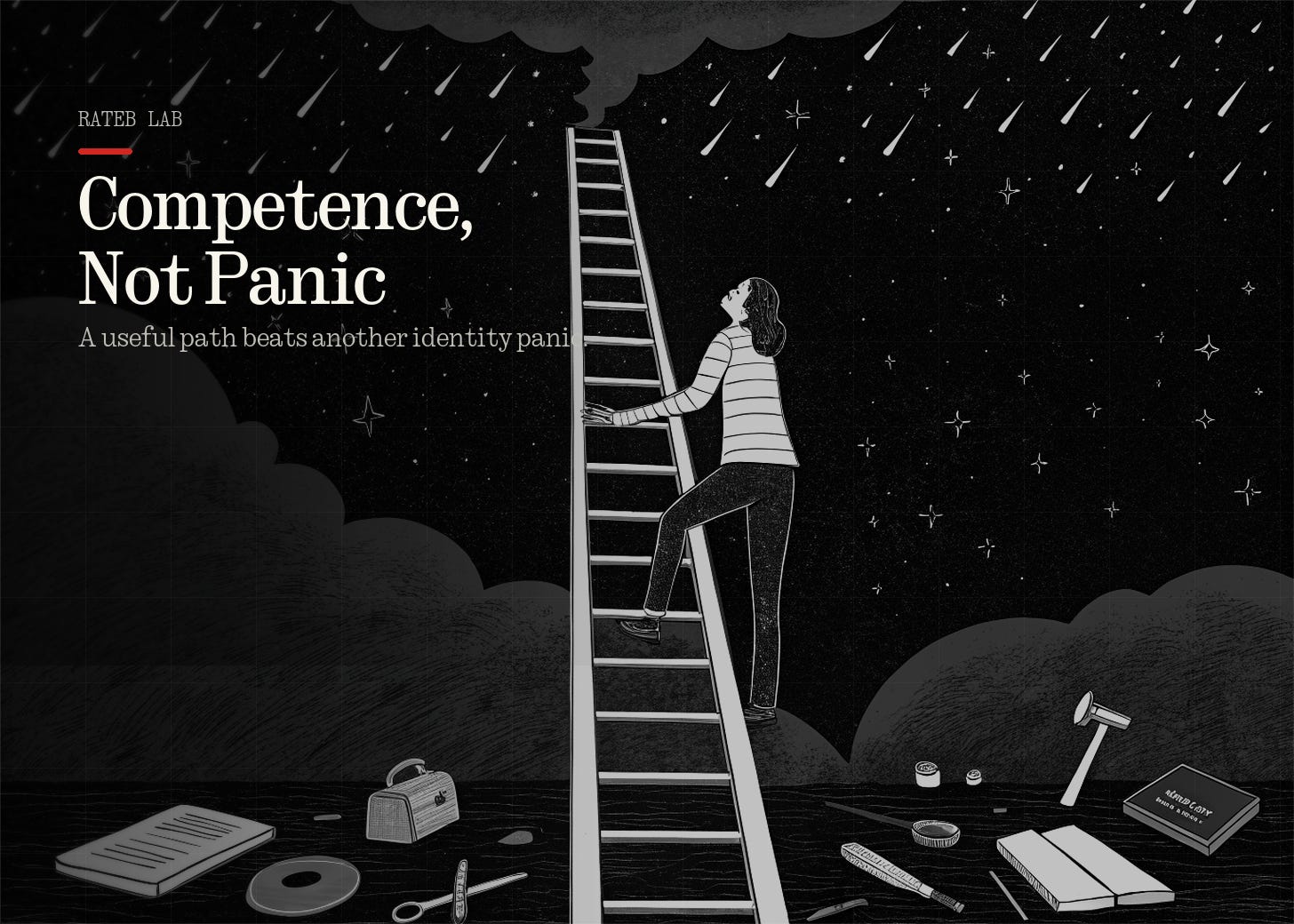
The better frame for boys and men is not culture-war panic or blame. It is agency, competence, useful work, apprenticeship, relationships, and real-world momentum.
The visible headline is only the symptom. The deeper lesson is about inputs, constraints, incentives, tools, ownership, and the kind of capability that compounds quietly before the public notices.
The wrong model
The wrong model is to treat this as entertainment or outrage.
Outrage gives you a strong emotional hit, but it rarely tells you what to build next.
A better model is to ask what kind of person becomes more useful when this shift continues.
If the answer is only “someone with opinions,” the analysis is too shallow.
If the answer points toward a capability, a workflow, a technical skill, a documentation habit, a system map, or a new kind of operational judgment, then the analysis can become useful.
The mechanism
Here is the mechanism I see:
A society does not rebuild men by humiliating them into motion. It rebuilds them by giving them demanding paths where competence, sacrifice, work, and contribution become visible again.
That mechanism matters because it turns a broad public story into a personal strategy question.
What should I learn?
Where is leverage moving?
Which skills are becoming less optional?
Which old assumptions are becoming expensive?
Where does clear thinking beat reaction?
The conversation returns again and again to education gaps, work, dating, screens, sedation, moral panic, and the difference between dangerous men, useless men, and competent peaceful men.
The lesson is not to panic. The lesson is to stop confusing a visible trend with the system that produces it.
My field note
I am not interested in pretending to be above this.
I am also rebuilding.
I am learning cloud, Linux, AWS, AI workflows, automation, and the kind of technical thinking that makes a person harder to replace. So when I look at a story like this, I am not only asking what it means for markets or institutions.
I am asking what it demands from people like us.
People who are trying to become useful again.
People who do not have inherited status.
People who need skills that survive contact with the real world.
People who want agency without lying to themselves.
The answer is rarely glamorous.
It usually looks like better notes, stronger fundamentals, more precise systems, cleaner writing, real projects, visible proof, and the discipline to keep learning after the hype cycle moves on.
The practical move
Replace identity panic with one competence loop: physical routine, useful skill, apprenticeship-quality work, social responsibility, and public proof of progress.
That is the practical move I would take from this.
Do not copy the surface.
Find the bottleneck. Build near it.
If the bottleneck is energy, learn the systems that depend on energy.
If the bottleneck is context, build better knowledge architecture.
If the bottleneck is judgment, create approval gates.
If the bottleneck is agency, rebuild the daily loop that proves you are still in the game.
This is how a trend becomes a learning path.
Final reflection
The future does not reward people who merely notice change.
It rewards people who can translate change into capability.
That is the line I want to keep returning to.
Not panic.
Not passive consumption.
Not another saved thread.
A clearer map.
A better loop.
A more useful skill.
A stronger operating system around your own work.