

There are seasons when discipline becomes the easiest thing to blame.
You look at the study plan you did not follow. The training routine that became inconsistent. The writing habit that disappeared. The course that kept waiting for a cleaner week. From the outside, the diagnosis looks simple.
You need more motivation.
You need better time management.
You need to stop being lazy.
But that diagnosis misses something important. Attention does not only disappear because you are weak. Sometimes it disappears because your life keeps making quiet claims on it before the work even begins.
A house problem. A moving problem. A document problem. A money problem. A safety problem. A tense living situation. A deadline you cannot resolve. A decision that has not been made.
Each one looks small when you describe it in a sentence. Together, they become a background process that never stops running.
That is the line I keep coming back to:
Your attention is already paying rent somewhere.
The wrong map is self-criticism
The wrong map says focus is mostly a personal virtue.
If you cannot study, you are undisciplined. If you cannot build, you are distracted. If you cannot write, you are inconsistent. If you cannot train, you are not serious enough.
There is some truth inside that map. Discipline matters. Sleep matters. Structure matters. Nobody can rebuild a life only by explaining their friction.
But self-criticism becomes dangerous when it skips the environment.
If your nervous system is still scanning for housing stability, money stability, social safety, or basic control over your day, then part of your mind is not available for deep work. It is busy watching the door.
That does not make you helpless. It makes the real problem more precise.
Sometimes the first productivity move is not another app, another routine, or another motivational promise. Sometimes the first move is removing one unresolved pressure that keeps stealing your baseline.
The better map is infrastructure
A stable home base is not only comfort.
It is productivity infrastructure.
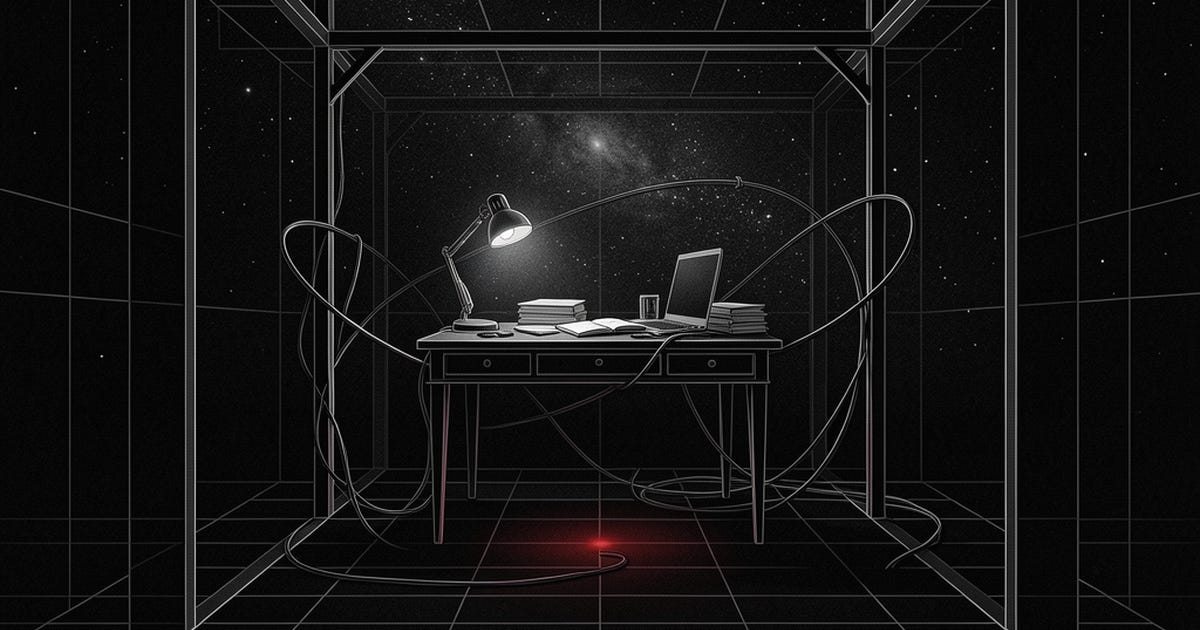
A desk is not just furniture when you are trying to rebuild your skills. It is a place where your brain learns that work can begin without negotiation. A room is not just space. It is a container for sleep, study, training recovery, and planning. A signed contract is not just paperwork. It can be the moment your mind stops spending energy on uncertainty and starts spending it on the future again.
This is why vague productivity advice often fails people who are rebuilding under pressure.
It assumes the environment is neutral.
But the environment is never neutral. It either reduces the number of decisions needed to begin, or it adds new decisions before every important action.
When the base is unstable, even simple work gets expensive.
Opening the laptop costs more. Starting a lesson costs more. Cooking properly costs more. Training costs more. Sleeping on time costs more. Replying to messages costs more. Planning the week costs more.
The task itself may not be difficult. The context around the task makes it heavy.
The mechanism is open loops
The mind treats unresolved life friction like an unpaid bill.
It may not be visible on the calendar, but it keeps sending notifications.
Where will I live? When will this be solved? What if this falls through? Who do I need to call? What did I forget? What happens if the answer is no? How much time do I have? How many things depend on this one thing working?
Those questions do not always shout. Often they whisper.
That is what makes them dangerous.
A loud crisis is obvious. You cancel the day and deal with it. A quiet open loop is different. It lets you pretend the day is normal while quietly reducing the energy available for everything meaningful.
Then you sit down to study cloud engineering, write a technical note, train, or build a workflow, and you wonder why your mind feels split.
It is split.
One part of you is trying to build the next version of your life. Another part is still trying to secure the floor underneath it.
The solution is not to romanticize instability. The solution is to name it accurately.
You are not always fighting laziness. Sometimes you are fighting too many open loops.
A field note from rebuilding
I felt this clearly after a long period of housing stress.
The important feeling was not only relief. Relief is obvious. Anyone feels lighter when a problem gets solved.
The more interesting part was what became possible again.
Study started to feel reachable. Time structure started to feel less theoretical. Training, sleep, and planning did not feel like motivational slogans anymore. They felt like things that could return once the base stopped shaking.
That taught me something I do not want to forget.
When life is unstable, you can mistake the symptom for the cause.
You think, I am losing discipline.
But the deeper truth may be, my attention is being taxed by unresolved survival friction.
That distinction matters because it changes the next move.
If the problem is only discipline, the answer is pressure. Push harder. Wake earlier. Download the app. Make the plan stricter.
If the problem is infrastructure, the answer is repair. Stabilize the base. Close the loop. Reduce the number of decisions. Create a room, a desk, a rhythm, a repeatable first step.
Pressure can help for a day.
Infrastructure helps for a season.
A simple friction audit
Before judging your discipline, try a different audit.
Ask five questions.
1. What open loop is taking attention before I start?
Do not look only at tasks. Look at unresolved realities. Housing, money, health, relationships, bureaucracy, documents, sleep, movement, workspace, unclear commitments.
2. What problem keeps making every other problem heavier?
Some friction is central. Solve it and three other things become easier. Ignore it and every habit becomes more expensive.
3. What is the smallest stable base I can create this week?
Not the perfect life. A stable base. A desk cleared. A sleep window protected. A moving checklist finished. One admin call completed. One place where your work can begin without drama.
4. Which habit should return first?
After instability, do not restart everything at once. Pick the habit that restores the most trust in yourself. For some people, that is sleep. For others, training. For others, one daily study block.
5. What would make beginning boring again?
This is the real goal. You do not want every useful action to feel heroic. You want the first step to become boring, repeatable, and almost automatic.
Final reflection
A lot of people trying to rebuild their lives are not lazy.
They are overloaded.
They are trying to study while moving. Build skills while handling bureaucracy. Train while sleeping badly. Write while worried. Focus while the base layer of life is still unfinished.
That does not remove responsibility.
It makes responsibility more honest.
The next time your focus disappears, do not only ask, What is wrong with me?
Ask a better question:
What is my attention already paying for?
If you answer that clearly, the solution may stop looking like another productivity trick.
It may look like a floor, a desk, a routine, a closed loop, and one stable place to begin again.